Bienvenido de nuevo
Inicia sesión en tu cuenta de Zyla API Hub


O
¿No tienes una cuenta? ¡Regístrate!
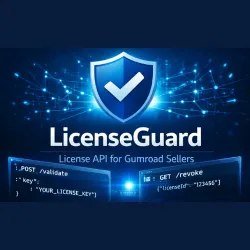
API de verificación de licencias para validar claves de licencia, hacer cumplir los límites de activación y prevenir el uso compartido de claves para software, SaaS, complementos y aplicaciones de escritorio
{"valid":true}
curl --location --request POST 'https://zylalabs.com/api/11900/license+verification+and+activation+api/22616/validate+license' --header 'Authorization: Bearer YOUR_API_KEY'

--data-raw '{
  "licenseKey": "TEST-LICENSE-123",
  "deviceId": "device-abc-001"
}'
Después de registrarte, a cada desarrollador se le asigna una clave de acceso a la API personal, una combinación única de letras y dígitos proporcionada para acceder a nuestro endpoint de la API. Para autenticarte con el Verificación y Activación de Licencia API simplemente incluye tu token de portador en el encabezado de Autorización.
| Encabezado | Descripción |
|---|---|
Autorización
|
Requerido
Debería ser Bearer access_key. Consulta "Tu Clave de Acceso a la API" arriba cuando estés suscrito.
|
Sin compromiso a largo plazo. Mejora, reduce o cancela en cualquier momento. La Prueba Gratuita incluye hasta 50 solicitudes.
(Ahorra 2 meses pagando anualmente 🎉)




Empresas líderes confían en nosotros
LicenseGuard – API de Verificación y Activación de Clave de Licencia
LicenseGuard es un backend de licencias de software listo para producción para desarrolladores que necesitan validación segura de claves de licencia, cumplimiento de activación y revocación basada en reembolsos sin construir infraestructura personalizada
Esta API te permite:
Validar claves de licencia de forma segura
Hacer cumplir los límites de activación por dispositivo
Prevenir el uso compartido de claves
Revocar automáticamente el acceso después de reembolsos o cancelaciones
Rastrear el estado de activación en tiempo real
Envía una solicitud POST al endpoint /validate con:
licenseKey
deviceId
La API verifica la licencia, comprueba los límites de activación y devuelve una respuesta de validación clara que indica si la licencia es válida
Se incluye un endpoint ligero /health para monitoreo y verificaciones de tiempo de actividad
Desarrolladores independientes que venden software descargable
Herramientas SaaS distribuidas fuera de las tiendas de aplicaciones
Desarrolladores de juegos que venden licencias directas
Creadores de plugins y temas
Creadores de herramientas de IA que distribuyen aplicaciones de escritorio
LicenseGuard previene el intercambio de claves de licencia impone límites de activación por dispositivo y revoca automáticamente el acceso tras reembolsos sin que tengas que construir tu propio backend de licencias
Llama al endpoint /validate con una clave de licencia y un ID de dispositivo de tu aplicación Recibirás una respuesta JSON clara que indica si la licencia es válida
Sí es ideal para software de escritorio complementos juegos y herramientas descargables distribuidas fuera de las tiendas de aplicaciones
Sí puedes restringir cuántos dispositivos puede activar una licencia
El acceso se puede revocar automáticamente dependiendo de tu configuración
Sí Zyla ofrece una prueba gratuita de 7 días para que puedas probar la integración antes de comprometerte
Está diseñado principalmente para productos basados en claves de licencia. Para la gestión de suscripciones de SaaS, puede ser necesaria lógica adicional
Sí LicenseGuard funciona en un backend alojado escalable y está diseñado para uso en producción en el mundo real
El endpoint /validate devuelve una respuesta JSON que indica la validez de la clave de licencia Incluye un campo booleano "válido" que especifica si la licencia está activa y cumple con los límites de activación
El campo principal en la respuesta del endpoint /validate es "valid", que es un booleano que indica si la clave de licencia es válida. Se pueden incluir campos adicionales en futuras actualizaciones para respuestas más detalladas
Los datos de respuesta del endpoint /validate están estructurados en formato JSON. Generalmente contienen pares de clave-valor, lo que facilita su análisis e integración en aplicaciones
El endpoint /validate acepta dos parámetros: "licenseKey" (la clave a validar) y "deviceId" (el identificador único del dispositivo que está intentando la activación)
Los usuarios pueden personalizar las solicitudes al endpoint /validate proporcionando diferentes valores de "licenseKey" y "deviceId" para verificar la validez de licencias específicas en varios dispositivos
Los casos de uso típicos incluyen validar licencias de software durante la instalación, hacer cumplir los límites de activación para plugins y gestionar el acceso a aplicaciones SaaS según el estado de la licencia
La precisión de los datos se mantiene a través de procesos de validación seguros y verificaciones en tiempo real contra la base de datos de licencias asegurando que solo se activen licencias válidas
Si el endpoint /validate devuelve un resultado vacío o parcial, generalmente indica una licencia inválida o un dispositivo no registrado. Los usuarios deben implementar el manejo de errores para gestionar estos escenarios de manera efectiva


 Ejecutar en Postman